As those who know me will testify, I’m not a violent person, maybe a little irritating at times but I don’t get into fights. The last time I laid a blow on someone must have been at school around 50 years ago. As a Frenchman I used to know once said: ‘I’m a lover not a fighter’. Well that’s the French for you.
Those paying close attention to the above paragraph will likely be expecting a connective but, so here it is, but on some occasions, I sure am tempted to sock someone on the jaw. Only last week if there had been a blunt object to hand, I’d have started laying into a certain person with both vim and vigour.
Let’s call him John, let’s call him that because it’s his real name and a more punchable person I’ve yet to meet.
The family went to the Isle of Wight over Easter, the weather was beautiful, the scenery was beautiful, but as the hymn I was forced to sing at school had it: ‘Every prospect pleases and only man is vile.’ Not everyone by any means, most were kind welcoming and friendly but there had to be an exception and the exception in this case was the guy who hired us a car.
Hertz, Avis and the other big boys were out of cars so Mrs Preen got in touch with a small independent hire firm and booked a car so we could trundle about the island to our heart’s content.
We showed up and immediately hit a problem. John took one look at Bucket the dog and Bucket took one look at John and it was clear it was not love at first sight.
“You didn’t tell me about the dog,” said John.
“It’s a small dog, very clean,” I said.
Secretly I was hoping Bucket would take a chunk out of his ankle, but Bucket is a well brought up dog and contented herself with spraying urine around the car lot.
‘Hmmnn,’ said John and left us to our own devices and went off to his shed.
Fifteen minutes later he came back from the shed, which I noticed he locked, though I was only 15 feet away.
By then I’d persuaded the family to leg it to a local Café, so unencumbered by dog I got down to the paper work.
I don’t know how often you rent cars, but one of the rituals is to go around the vehicle while the person from the hire firm notes down scratches and bumps on the bodywork. We ambled around with John pointing out the various marks, but what he wasn’t doing was noting them down, so very politely I challenged him on this.
This brought a swift response: “Look I’ve been in business on the Isle of Wight for 45 years, I wouldn’t have lasted 45 minutes if I’d tried to cheat people.”
Suitable chastened we went back to the shed and I signed on the dotted line.
As I was leaving, he said: “Oh the clutch is rather high and a red oil light comes on occasionally, but it’s nothing to worry about.”
In retrospect what part of that sentence made it seem like a good idea to drive the car away with my family for a few days sightseeing, but that’s what I did.
But my stupidity didn’t end there. On the way to our rental cottage, a massive electrical stink started coming from the engine and the clutch was slipping like an eel in mud.
Mrs Preen said: “I really think it would be a good idea to take the car back.”
I said well I can’t face seeing that bloke again, so I gave him a call and he said not to worry. I told Mrs Preen everything would be fine.
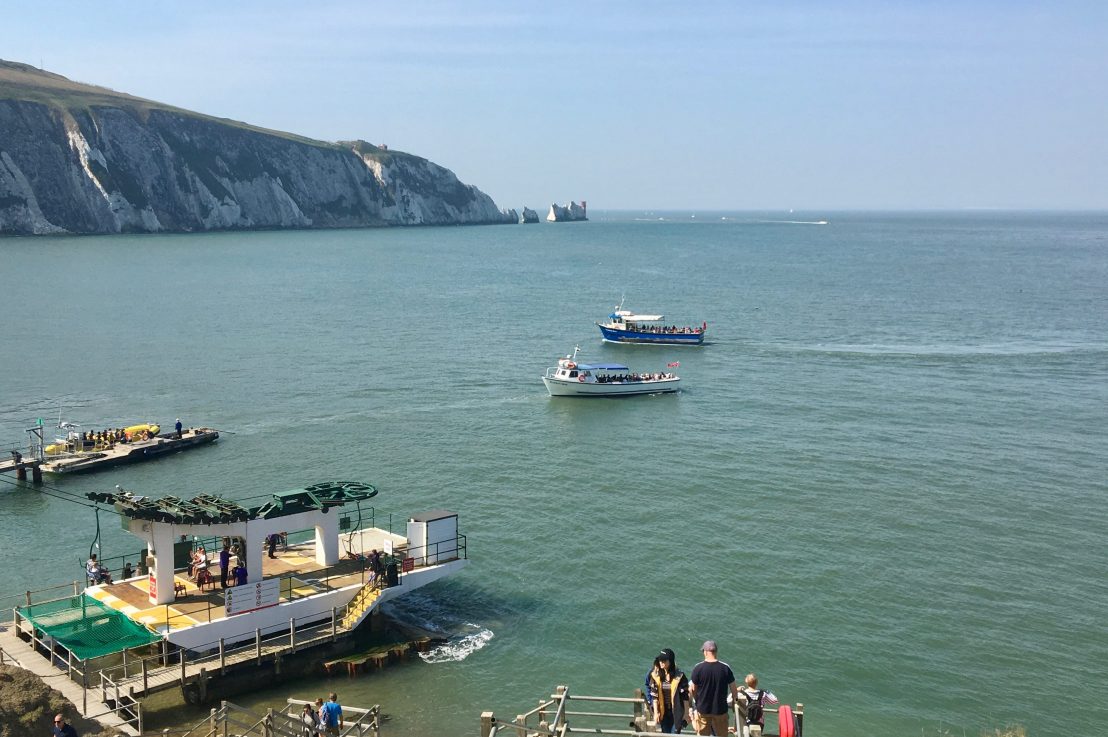
The next day we decided to drive to The Needles (see picture above) a picturesque spot on the western edge of the island.
En route the car was making pretty heavy weather and finally crapped out completely as we entered the visitors centre.
“You can’t park there,” said a man in a hi-viz jacket.
Scrabbling around trying to get a phone signal, I called John to tell him his lousy piece of junk was now an unwanted piece of street furniture.
Before I go any further, I want to add this. Until five years ago we lived in Asia and the one thing we learned there was that if you get angry, start shouting and generally reading the riot act to someone they just shut up shop and will have nothing to do with you. Since returning to the UK I’ve tried to maintain this sublime piece of Asian wisdom.
When I told John what had happened it was quite clear he was expecting the hairdryer treatment.
Something along the line of: “You’ve ruined our holiday, the wife is in tears, the daughter wants to go home, the dog’s been sick etc…”
In calm tones I made it clear we required another car as quickly as possible, but as the sun was shining and we’d inadvertently ‘parked’ in a prime spot we joined the rest of the tourist cattle and went about our tourist business.
John arrived with another clapped out piece of junk and said: “Thank you so much for not shouting at me.”
I said well I’m on holiday and don’t want to shout at anyone.
He said well, you’d be surprised most people do. (Bit of a giveaway there, John)
At the end of the holiday I returned the car and he was now my new best friend thanking me yet again for not screaming at him.
But let me say this, even with my Zen like calm just because I didn’t do it, doesn’t mean I didn’t feel like punching the little sod.