Right outside my office window is a magnificent London Plane Tree. It’s probably around two hundred years old and is one of London’s wonders. Here’s two things that might get you interested – no Plane Tree has ever died from old age and they were ‘created’ about a mile from where I’m tapping at my keyboard in Vauxhall.

London Planes are easy to recognise as they are large, have beautiful hand-sized leaves and slough their skin like a snake. The bark peels off in layers and is one of the reasons they are so ubiquitous and healthy as its thought the pollution, dirt and grime of London falls away as the bark peels. They were planted in great numbers at the beginning of the 19th Century when the London air was thick with the soot and filth of the industrial revolution. Many of those trees are still alive and none have died from senescence so no one really know how long they live. Today they account for more than half of all the trees in London

The London Plane is a hybrid of the Oriental Plane and the Western Plane and was created or discovered, there is some dispute about this, by 17th century naturalist John Tradescant. He maintained a nursery garden in Vauxhall and Tradescant Road can be found just off South Lambeth Road in the heart of Little Portugal.
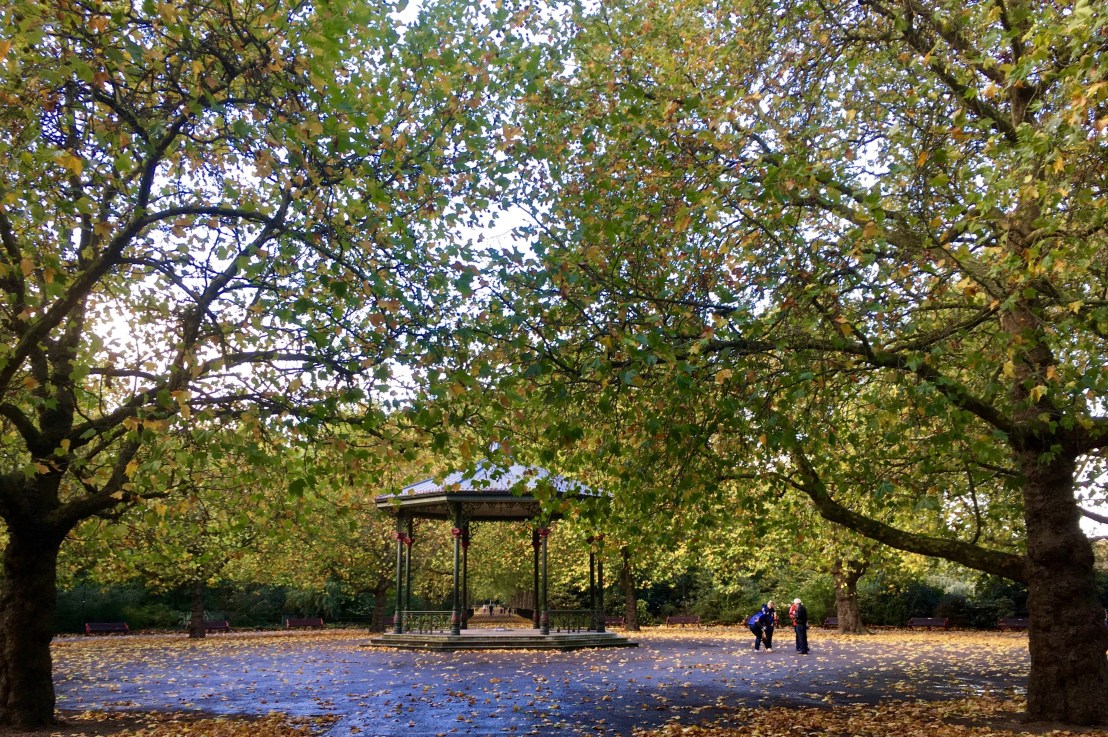
The leaves on these mighty trees are just starting to turn. As sunlight hits them, there is a glow of gold, russet and green set off by the camouflage bark of the trunk. Take a trip to Battersea Park, or any other London park, and see them in all their glory.